Game of War - Fire Age
- 2.7
- Rating
- 50.00M
- Installs
- Free
- Price

 Analysis by App-foxy
I approached Game of War - Fire Age expecting a familiar mobile strategy game, but its strongest first impression comes from the way it presents scale. The game asks me to think in terms of a growing kingdom, dangerous creatures, treasure, armies, and long-term decisions rather than a single quick battle. That broad fantasy framing is appealing when I want a game that can sit beside me throughout the day, although it also means the experience is less immediate than a compact strategy title built around short, self-contained matches.
Developed by Epic War, this free strategy game has been available since May 7, 2014, and its long life is visible in the size of its audience. It has passed 50 million installs, while its average rating sits at 2.7 from around 1.4 million ratings. Those figures tell me two useful things at once: there is a large community and plenty of accumulated content around the game, but the experience clearly does not satisfy everyone. I think that split is important to understand before downloading it.
The basic appeal is easy to grasp. I build toward a stronger position, prepare for conflict, pursue rewards, and decide how actively I want to manage progress. The store summary talks about becoming a legend, fighting epic creatures, and unlocking rare treasure, but in practice the attraction is the loop connecting those ideas. Every improvement is supposed to make the next objective feel more achievable. When that loop works, the game creates a pleasant sense of momentum. When progress slows, the same structure can feel demanding and repetitive.
You May Also Like

 Blood Strike: 2.5 Anniversary
Blood Strike’s Loadouts Turn Every Drop Into a Tactical Gamble
A close look at Blood Strike’s custom loadouts: how fast access to signature weapons reshapes its battle royale rhythm, rewards preparation, and narrows the gap between fights.

 Pandora - Music & Podcasts
Pandora’s Music Is Easy to Start, but Harder to Recover
Pandora’s strength is its low-effort path from a seed to a station. Its weak spot is how much confidence it asks you to place in connection, setup, and quiet recovery.

 8 Ball Pool
 Is Built on Rivalries, Rematches, and Routine
A close look at the rivalries, rematches, shared routines, and unanswered safety questions that turn a quick pool match into a persistent mobile community.

 Samsung Music
’s Quiet Strength Is Playing What You Already Own
Its reach comes less from spectacle than from dependable access to a personal library. That simplicity is both the app’s strongest retention engine and its ceiling.

 AccuWeather: Weather Radar
AccuWeather Review: A Quick, Clear Forecast for Everyday Decisions
For everyday plans, the best forecast is the one you can understand quickly. AccuWeather makes rain timing, radar, and local conditions easy to act on, with a few trade-offs.

 Hill Climb Racing
Why Hill Climb Racing Still Turns Crashes Into One More Run
A tiny car, a bumpy hill and one more upgrade: Hill Climb Racing keeps resurfacing because its simple chaos makes every near-miss feel personal.
More From Our News Desk
View All News


How the fantasy setting shapes the experience
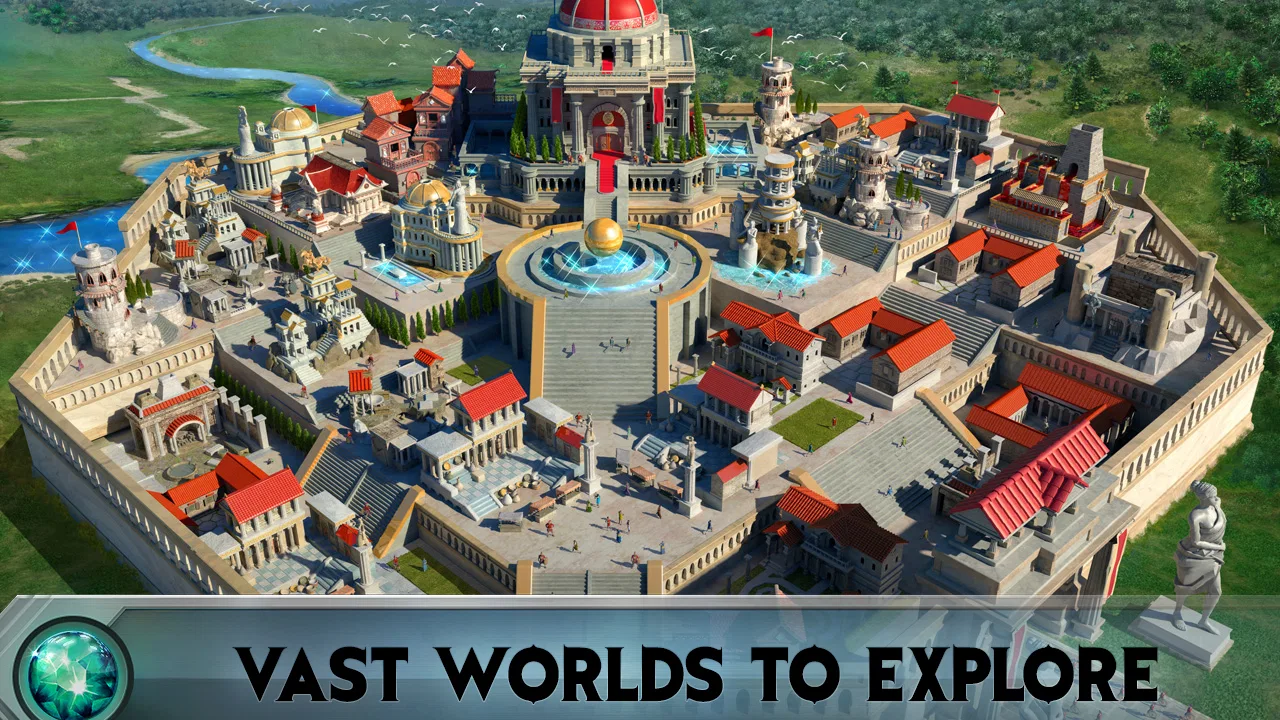
The visual language is built around a classic heroic fantasy world: fortified settlements, military ambition, powerful monsters, and valuable discoveries. I found that setting useful because it gives ordinary management decisions a clear emotional frame. Improving a building does not feel like adjusting an anonymous menu; it is presented as preparation for a larger struggle. Even when the underlying action is about waiting, selecting, or planning, the fantasy theme keeps the goal understandable.
That consistency matters more than visual novelty here. The game is not at its best because every screen feels surprising. It works better when its art direction repeatedly reinforces the same promise of a kingdom under pressure. The sense of scale encourages me to think ahead. I am not simply asking whether I can win the next encounter; I am considering whether my current choices leave me ready for the one after it.
The creature-focused side of the setting also gives the game a useful change of mood. Armies and construction suggest control, while monsters and treasure suggest risk and discovery. Those two ideas help prevent the experience from becoming only a spreadsheet of upgrades. I enjoy the contrast, especially when I have been concentrating on gradual development and then shift attention toward a more adventurous objective.
There is a trade-off, though. A grand fantasy presentation can make the game feel more complicated than it initially appears. New players may understand the theme immediately but still need time to understand which choices deserve attention first. My advice is to treat the opening period as orientation rather than as a race. Learn what each screen is asking you to manage, notice which actions advance your immediate goals, and avoid spending resources simply because an upgrade is available.
One of the more useful habits I developed was to connect every improvement to a purpose. Before starting an upgrade, I asked whether it supported defense, future expansion, access to better rewards, or a more efficient routine. That small check reduced the feeling of clicking through tasks without a plan. In a game with a large fantasy backdrop, it is easy to chase whatever looks most impressive. A narrower personal objective makes the world easier to read.
A world that rewards deliberate attention
I would not describe the setting as a substitute for deep storytelling. Its main job is to give structure and atmosphere to the strategy loop. Players looking for a heavily scripted role-playing adventure may find the world less intimate than expected. The fantasy is broad and functional: it makes the kingdom, creatures, battles, and treasure feel like parts of one place, but the strongest engagement comes from making decisions rather than following a character-driven plot.
That distinction helped me decide who might enjoy it. If you like the idea of checking a developing realm, preparing for larger goals, and watching several priorities compete for attention, the setting supports that style well. If you want a tightly written campaign that moves from one dramatic scene to the next, the slower kingdom-building structure may feel unfocused.
The age rating is Everyone 10+, which fits the recognizable fantasy-conflict tone. I would still recommend that younger players understand the importance of the game’s optional purchases before spending time with it. The game is free to start, but its in-app purchases range from $4.99 to $99.99 per item. That is not a minor detail for a strategy game built around long-term progress, so I would approach purchases as a deliberate budget decision rather than an automatic shortcut.
Sound, pacing, and the feeling of a living kingdom
The audio and presentation work together to make the game feel larger than a collection of isolated actions. The fantasy mood benefits from a sense of ceremony around progress: an upgrade, a reward, or a powerful objective should feel like part of a continuing campaign. I found that this matters most during routine sessions, when the game needs enough atmosphere to keep planning from becoming dull.
Its rhythm is naturally uneven. Some moments invite active attention, especially when I am choosing a target or deciding how to use available resources. Other moments are better suited to brief check-ins, because the broader strategy is about preparing the next step rather than constantly reacting. I see that as a defining feature rather than a flaw, but it will not suit everyone.
For example, I can imagine opening the game during a work break, reviewing the state of my kingdom, starting a useful improvement, and leaving with a clear next task. Later, I might return to collect progress, reassess my priorities, and prepare for a more demanding objective. That routine is satisfying when I want a persistent game that fits around my day. It is frustrating when I want immediate action every time I tap the screen.
The pacing also changes how I judge success. In a traditional match-based strategy game, I usually know when a session has ended and whether I won. Here, progress is more cumulative. A session can be worthwhile even if I have not achieved a dramatic victory, provided I have improved my position or made a smarter plan. That makes the game more suitable for patient players than for people who need a clear result every few minutes.
My practical tip is to decide in advance how often you want to check in. If you keep reopening the game without a specific purpose, the slower rhythm can turn into aimless maintenance. I got more from it when I used a simple routine: inspect current priorities, complete the most useful action, review the next obstacle, and stop. That approach preserved the atmosphere without letting the game occupy more attention than I intended.
Where the strategy systems fit—and where they resist
The central mechanical appeal is the relationship between preparation and payoff. I am encouraged to think beyond one action and consider how several decisions support one another. That is more interesting than tapping the most obvious upgrade, because a strong-looking improvement may not be the best choice if it does not help my current objective.
This is also where the game can feel demanding. A broad strategy structure creates more room for mistakes than a simple puzzle or short tactical game. Choosing poorly may not produce an instant failure; instead, it can leave me with a weaker position later. I appreciate that consequence because it gives decisions weight, but I understand why some players may experience it as friction.
The best way I found to manage that friction was to separate short-term needs from long-term ambitions. If I was preparing for an immediate challenge, I focused on the resources and improvements that directly supported it. If I was simply developing the kingdom, I avoided scattering attention across too many unrelated goals. This made the game feel less like a list of demands and more like a sequence of manageable projects.
Another useful trade-off concerns convenience. In-app purchases can make the path feel more comfortable for players willing to spend, but I would not recommend treating them as the default solution to every delay or setback. The price range reaches from $4.99 to $99.99 per item, so the upper end represents a serious expense. I would first learn whether the underlying loop is enjoyable without spending. If the waiting, planning, and gradual improvement already feel rewarding, optional purchases can remain optional. If the game only feels satisfying after paying, that is a sign to step away.
The current version is 12.2.2.671, and the minimum operating-system requirement is Android 6.0. For someone using an older device, checking compatibility before planning a long-term commitment is sensible. More importantly, the version number reflects a game that has continued through many updates and stages of its life. That can be reassuring for players who want an established title, but it can also mean the experience feels more layered than streamlined.
How it compares with other mobile strategy choices
Compared with a compact tactics game, this title asks for more patience and offers less certainty that every session will end with a neat conclusion. A tactics game is usually better when I want to solve a battlefield problem immediately. Game of War - Fire Age is more appealing when I want an ongoing project that develops between visits.
Compared with a pure city builder, the fantasy conflict gives the decisions more urgency. I am not only arranging a settlement for visual satisfaction; I am building toward strength, protection, rewards, and future opportunities. The cost is that the game can feel more pressurized than a peaceful construction experience. Players who prefer decoration and relaxed experimentation may find the strategic demands unnecessary.
It also differs from a traditional single-player campaign. The long-term structure is designed around continued involvement rather than a fixed path with a final chapter. That makes it a better fit for someone who enjoys returning to the same world, but a weaker choice for anyone who wants a complete adventure that can be finished and put aside.
For me, the deciding question is not whether it contains enough content; the large install base and established history make its scale clear. The question is whether I enjoy the responsibility of maintaining momentum. If I like planning around future goals, the game has a strong reason to stay installed. If I mainly want quick battles, a more focused strategy game would probably respect my time better.
Who should play, and who should skip it
I would recommend this game to players who enjoy persistent fantasy strategy, gradual development, and decisions that become meaningful over several sessions. It is especially suitable for someone who likes checking progress during spare moments and returning later with a new objective. The setting gives those routines enough personality to feel like part of a campaign rather than ordinary task management.
I would be more cautious recommending it to players who dislike waiting, recurring management, or monetization in free games. The purchase range is substantial, and the slow-burn structure can make progress feel less direct than in a paid strategy title. People who want a game that respects a strict five-minute session may also prefer something built around individual rounds or puzzles.
New players should avoid trying to understand the entire game at once. Start by identifying the next meaningful goal, then choose improvements that serve it. Keep an eye on how often you return, because the game is most enjoyable when its rhythm fits naturally into your routine. I also suggest setting a spending limit before playing, not after the first moment of impatience.
Experienced strategy players may appreciate the need to balance immediate gains against future readiness, but they should not expect the precision of a small competitive tactics game. The pleasure here comes from managing a broad fantasy operation, not from reducing every decision to a perfectly controlled encounter.
My atmosphere verdict
After spending time with it, I see Game of War - Fire Age as a strategy game whose mood depends on scale, patience, and continuity. Its fantasy art direction gives construction and preparation a clear purpose, while the creature-and-treasure theme adds a welcome sense of adventure. The pacing supports short check-ins as well as longer planning sessions, though it can feel slow when I want immediate action.
The game’s biggest strength is the way its world makes long-term strategy feel tangible. I am not simply improving numbers; I am trying to make a kingdom more capable of handling what comes next. Its biggest weakness is the same structure viewed from the other side: progress can demand attention, patience, and restraint around purchases. The average rating of 2.7 suggests that this balance has not worked equally well for its very large audience.
My final recommendation is conditional but positive. Try it if the idea of a persistent fantasy kingdom sounds more appealing than a quick match, and give yourself time to decide whether the rhythm suits you before spending anything. Skip it if you want a self-contained campaign, rapid tactical victories, or a completely frictionless free experience. For the right player, the most rewarding part is not one spectacular battle but the feeling that each sensible decision makes the next challenge more manageable.
FAQs for Game of War - Fire Age
01What is Game of War - Fire Age?
Game of War - Fire Age is a massively multiplayer online strategy game focused on building an empire, training armies, researching technologies, and competing with players worldwide. You begin by developing a city, gathering resources, upgrading buildings, and joining a kingdom. The game combines city management, real-time events, alliances, diplomacy, and large-scale battles, so progress depends on both long-term planning and cooperation with other players.
02Is Game of War - Fire Age free to download and play?
Yes, Game of War - Fire Age is generally free to download and play on supported Android and iOS devices. However, it includes optional in-app purchases for resources, speed-ups, special packages, and other advantages that can accelerate progression. You can play without spending money, but advancement may require more patience, especially during higher-level upgrades, research, troop training, and competitive events against players who invest heavily.
03Does the game require an internet connection?
Yes, Game of War - Fire Age requires a stable internet connection because it is an online multiplayer strategy game. Your city, troops, alliance activities, events, and battles are connected to live game servers. It is not designed for offline play, so Wi-Fi or mobile data is needed whenever you want to log in, collect resources, participate in rallies, communicate with alliance members, or manage ongoing activities.
04What can players do in Game of War - Fire Age?
Players can construct and upgrade buildings, research technologies, gather and produce resources, train different types of troops, and develop powerful heroes. You can also join an alliance, communicate with other members, help reduce construction timers, participate in rallies, defend your city, and attack enemy targets. Regular events and kingdom-wide competitions provide additional objectives, although the amount of available content and competitive intensity can vary over time.
05Is Game of War - Fire Age suitable for new or casual players?
The game is accessible to beginners, but it can feel complicated because it contains many menus, currencies, timers, upgrade paths, troop types, and event systems. New players usually benefit from joining an active alliance and following beginner tasks before spending resources. Casual players can enjoy city development and social features, but highly competitive kingdoms may demand frequent logins and careful planning to remain competitive without making purchases.
Pros
- Large empire-building world with plenty of long-term goals.
- Active alliance system encourages teamwork and coordinated attacks.
- Frequent events provide new challenges and useful rewards.
- Detailed city upgrades let you customize your development strategy.
- Cross-platform multiplayer keeps the world populated and competitive.
Cons
- Progress can feel very slow without spending money on boosts.
- Heavy resource demands make advanced upgrades increasingly expensive.
- The large number of menus may overwhelm new players at first.
- Power gaps between veteran and newer players can be frustrating.
- Events and notifications may encourage frequent
- time-consuming check-ins.

Game of War - Fire Age
Gallery